
Putting industry on video - an archive for the future
Oak Farm Brickworks
Brick Making Feature
Oak Farm Brickworks
Brick Making Feature
Background
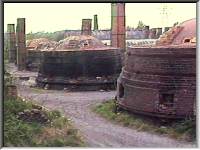
There were once dozens of coal mines and brick works around Kingswinford, Staffordshire in the English Midlands and I.A.Recordings was lucky to be able to visit this brick works while it was still working.
Situated between the end of the Stourbridge Extension Canal and the Kingswinford branch of the Great Western Railway, Oak Farm Brickworks was started by John Walker in 1849 to make firebricks from local clay.
It was then taken over by the Mobberleys, and was run by four generations of that family until the 1990s.
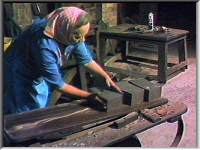
The works had changed little since it opened. An early grinding pan, tempering tub and pugmill was used to feed clay into a manual wire-cut machine. This produced finished bricks or "clods" of clay which were taken by barrow to be moulded in an old hand lever press, or by hand in wooden moulds.
The long tradition of women hand-moulders still continued, right up until the works closed.
Hand moulded bricks were laid out on the moulding shed floor to dry, while pressed bricks were dried in Tunnel dryers - these were manually loaded with racks of bricks running on narrow-gauge rails.
The works still operated "beehive" down-draught kilns, but they were fired by oil, rather than coal.
The clay used was imported from Amblecote, Dawley and Scotland, and mixed with burnt fireclay ("grog") to improve the refractory properties.
Oak Farm was able to produce specialist firebricks in small or medium quantities, for example welding tables and "spanner" bricks for the fireboxes of steam locomotives of the Severn Valley Railway.
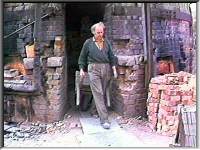
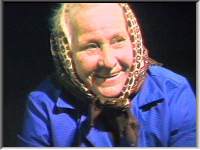
The video production Hand Made Bricks, scripted and narrated by former brick maker John Cooksey shows Oak Farm at work, following the process from raw clay to finished bricks. It was recorded in 1982, and was I.A.Recordings second industrial archaeology project. The recording includes bricks being hand-moulded by women, one of whom, still working at the age of 68 had started as a girl loading railway wagons.
Sadly the works has now closed and been demolished.
It was situated on Oak Lane, Kingswinford at NGR: SO 897 905
The images on this page are taken from the Production - "Hand Made Bricks"